

Stained Glass Playhouse
The Stained Glass Playhouse is an all-volunteer, non-profit community theatre hosted by the Marvin United Methodist Church in Winston-Salem, NC. It focuses on staging productions that encompass moral messages, family values, and community issues.
-
The former sanctuary of Marvin United Methodist Church was vacated in 1960 as the church built a new facility to better serve its congregation's growth. The building served a new role to house annual productions of the church's youth programs, which included Easter and Christmas productions and concerts.
This evolved into expanded productions that included youth musicals, original productions, and even dinner theatre. After attracting attention from the wider community, the playhouse continued to grow, eventually becoming incorporated as a separate non-profit in 1997 to community theatre. It is now a member of the Arts Council of Winston-Salem.
-
The Stained Glass Playhouse was long overdue for a branding update. Efforts to date were handicapped by shoestring budget that so many non-profits confront. Also, there were many stakeholders in the volunteer organization that had deep emotional connections with the theatre, making any branding efforts a delicate family matter in many respects.
In addition to these challenges, the organization faced a paucity of effective photography. And even if a photography budget was available, an individual play's promotional material often needed to be delineated and ready to launch before a cast had been identified.
-
Given the limitations, The Design Office of John Murph would approach a brand development that relied on conceptual illustration and a simple color palette. This development would be pursued alongside and in close communication with key stakeholders to insure team alignment and common purpose.
-
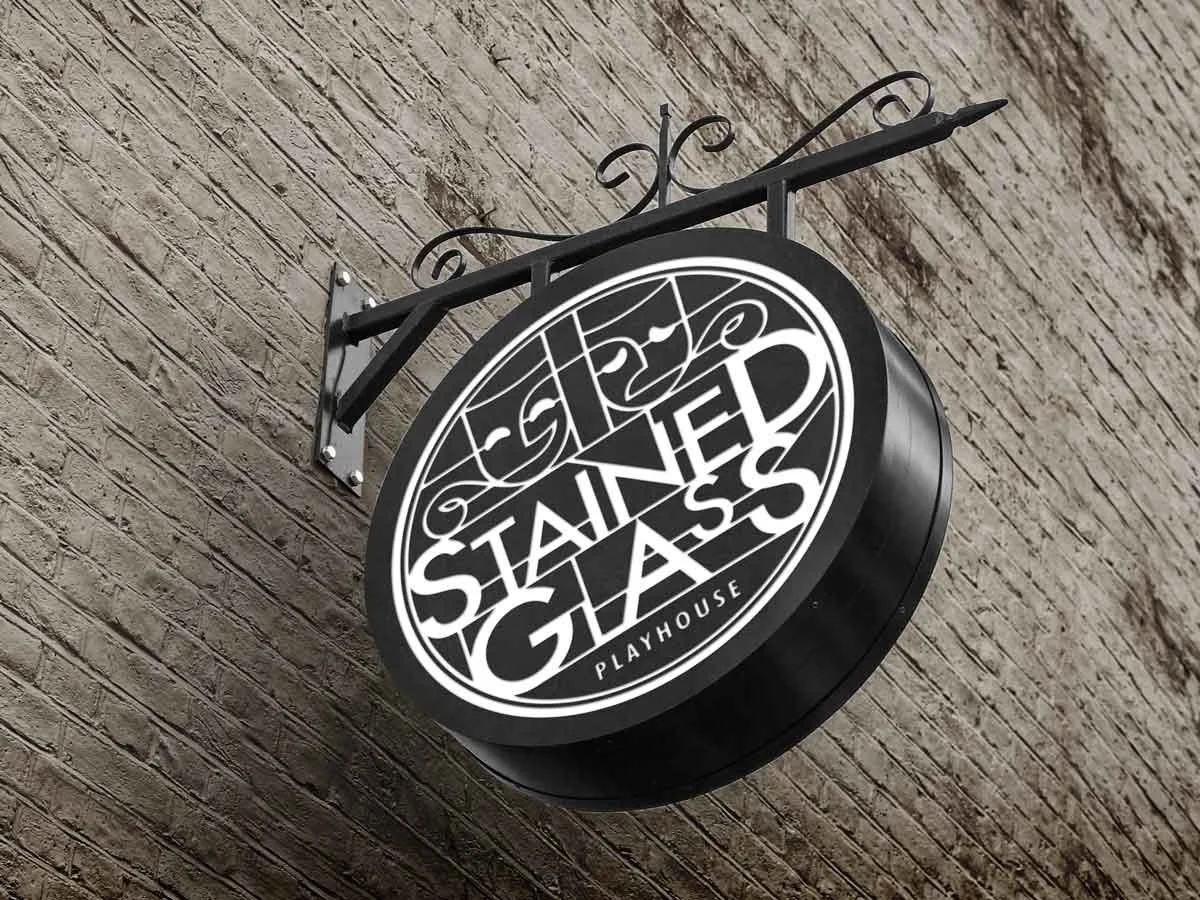
The brand development began with the creation of a new identity that embraced the visual associations of the theatre's name. The classic Greek Masks of the Muses, aka Melpomene (tragedy) and Thalia (comedy), were integrated into a composition emulating the lead framing that undergirds stained glass design. The typography was arranged in a chaotic design that also invoked the fragmented, dynamic nature of stained glass art.
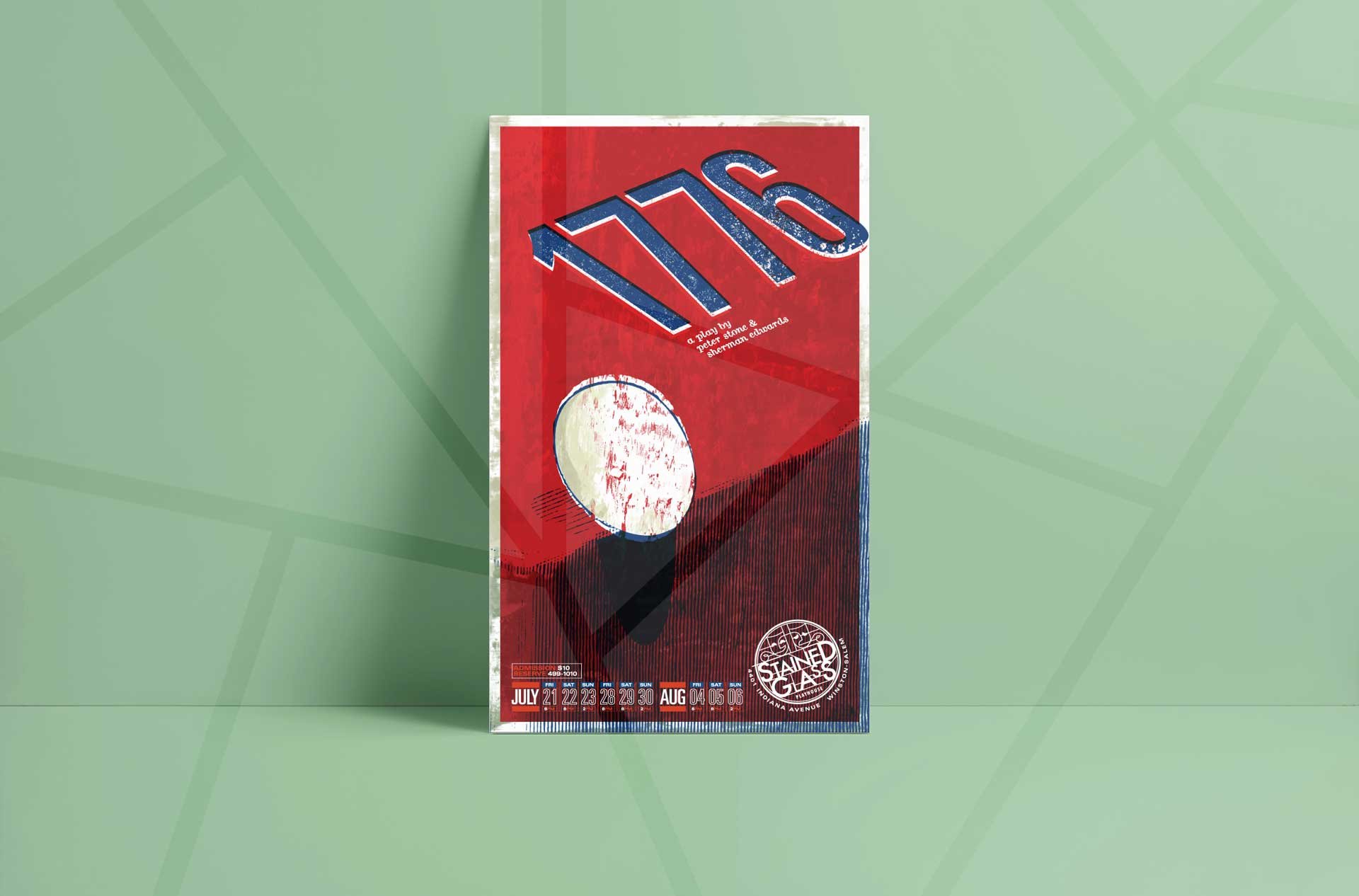
Several campaign compositions were created for upcoming productions in order to flesh out the conceptual, illustrated theme that the Design Office of John Murph proposed. These included classics such as The Diary of Anne Frank, The Boys Next Door, and 1776.
Brand Strategy | Logo | Print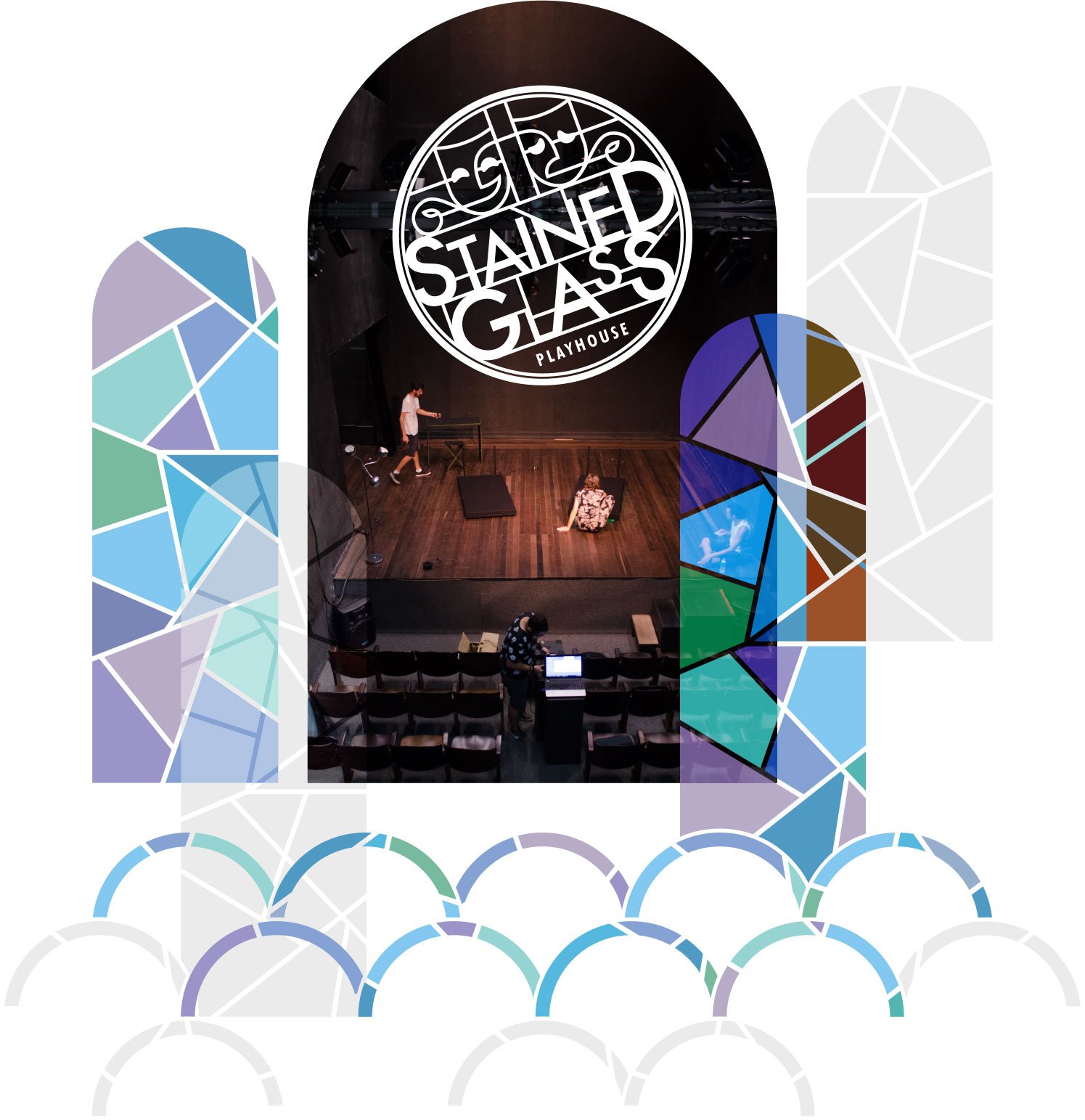





In an effort to come alongside such a noble pursuit, The Design Office Of John Murph volunteered concepts for a new branding effort, as well as several subsequent production posters.


