
About The Design Office of John Murph
“Answer me these questions three, ere the other side ye see!”
What do you want
to accomplish?
How will you
accomplish it?
Why should
people care?
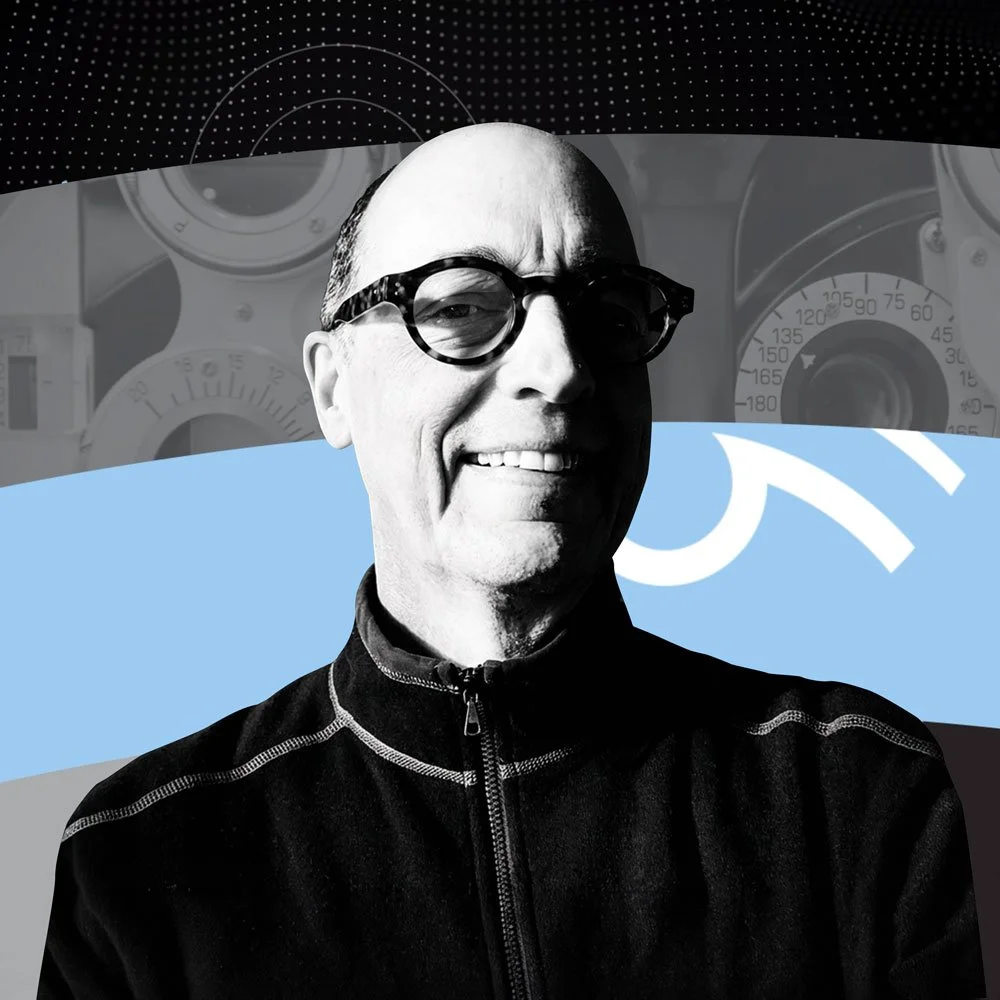
John Murph is a creative director and a 35-year veteran of the design and branding industry. He’s obsessed with these questions, and you should be too.


Before pen meets paper, before pixels take position, branding starts with these three key questions: WHAT, HOW, and most importantly, WHY.
The Design Office Of John Murph is a multidisciplinary creative studio with 30+ years of experience, dedicated to helping you articulate answers — and build a story — that resonates with your audience.
We pursue this mission by leveraging our most important skill: listening. With a lean structure that removes all the bureaucratic layers typical of most agencies, we're in the perfect position to do just that.
We pursue engaging solutions to branding challenges for a wide range of clients, from Fortune 500 companies to Mom & Pop start ups.
These brand solutions take many forms, ranging from core brand identities to packaging systems, and from promotional launch strategies to environmental design. Regardless of the medium, thoughtful, collaborative storytelling is the essential ingredient.
Reach out and start a conversation today. We can help you tell your story. We're ready to listen.


Our process
The Design Office of John Murph approaches every branding challenge with a 6-phase process.
After years of testing and refinement, we’ve found that this process offers a repeatable methodology that builds collaboration and insures alignment as we move towards a strategic brand design solution. The idea is that we “ladder up” to a solution TOGETHER.
Plus, this process offers a systematic approach for tapping into the absolute best resource for gaining insights about your business and the challenges you face: YOU. Who understands those challenges better than you? That’s why we consider ‘listening’ a superpower.
An example of a mood board presentation
Pages from a final Brand Style Guide
An example of a Brand Style Guide Cheatsheet
Here’s how our process works:
-
At this initial stage, we connect with you during a Discovery Call to flesh out the parameters of the project in question. This call includes preliminary questions designed to flesh out the overall parameters of your goals.
Afterwards, we provide you with an official proposal, which includes a timeline.
Once you've approved the estimate and paid an initial deposit (50%), we provide you with an online Client Portal that allows you to track progress and communicate with us as the project moves through the 6 phases.
Next, we schedule a Strategy Session.
-
Strategy sessions are essential. The goal is to perform a deep dive into your company's core values and mine insights that are not always obvious or discernible at a top level introduction or project brief.
You are the expert on your business to a degree that we can't match through independent research, or fully flesh out in the context of a discovery call. Our hope is that ALL relevant stakeholders would participate, because often individual team members bring to bear insights that may not be obvious to others — even to leadership.
A Strategy Session(s) provides an opportunity to pull everyone into a conversation, aligning us all in purpose and understanding towards the branding goal. It's not just us asking questions. It's the whole team brainstorming together to fully articulate a brand position that makes sense.
The process consolidates opinions into goals.
At the conclusion, that alignment is compiled and shared in a Clarity Document, providing the team a reference point going forward and a compass for subsequent phases.
-
In the next milestone of the process, we compile a summary of the brand strategy gleaned from the Strategy Session(s) and then present Mood Boards.
These illustrate three possible directions built from the Clarity Document. The boards include directional guidance on typography, color, patterns, iconography, and photography and/or illustration style. Our goal will be to choose a single direction to move forward with for the design phases.
-
Here, we begin the true Visual Identity Design development. This will include the cultivation of a logo, typography, final color palette, and associated graphic language (patterns, photographic direction, etc). We break this phase into two stages:
The FIRST STAGE of this development is the creation of a series of logo marks based on our conversations in the Strategy Sessions and Mood Board Review. Logo marks are the lynchpin of your branding, and need to balance simplicity, memorability, and uniqueness. Given the way logo marks must be flexible and accommodate a wide range of different contexts, we start by presenting them in black and white only, allowing a better focus on the pure design. Once the team has aligned on a select logo mark option, we move on to the next stage.
The SECOND PHASE of the Visual Identity Design fully fleshes out your brand, recommending color, typography, associated brand assets, photography direction, and more. This includes design concepts for hypothetical layouts, based on any touchpoints that you may have mentioned wanting to see in the Strategy Sessions. These will help to illustrate how the visual identity could work in implementation.
-
Once the Visual Identity Design has been determined and approved, we move on to the specific Touchpoints to be designed, based on the original proposal.
This can include packaging, website, social templates, etc.
The timing for this will be locked in after the Brand Design approval, depending on the type and number of Touchpoint deliverables identified.
-
Finally, once all art is approved and all deliverables have been met, we schedule a quick Offboarding meeting. This allows you to ask any remaining questions or troubleshoot any lingering issues.
During the meeting, we will share the final Brand Guidelines, and any outstanding digital assets.
This includes the final logo suite in multiple file formats, color palettes, and configurations. It also includes a Brand Guide Cheat Sheet, which is an abbreviated version of the Guidelines for quick reference.
If, for example, your Touchpoints included a website, the Offboarding meeting would also include a handover of all back end access.
Depending on the scope of work identified in the project proposal, the typical time frame can range from 4-12 weeks.
Reach out and schedule a Discovery Call today. We’re all ears.
Transparency and Communication:
The Client Portal
We believe in open access and are committed to clear communication as we move through the process of developing your brand.
We also know that, when you’re moving through the process of developing a new brand for your company or organization, piece of mind is critical. We want you to fell confident and rest assured that your brand is in good hands.
That’s why, as a part of our Onboarding Phase, you’ll receive access to a personalized Client Portal specific to your project. Throughout the process, you’ll be able to check in at any time to monitor progress, refer back to various milestones and presentations, or just reach out to make a comment or ask a question.
The video shown is the Tutorial we provide to new clients to help them orient to their Portal. This gives you a taste of what you can expect when we start working on your brand.